A damaged tooth does not always need an aggressive dental treatment. In many cases, the goal should be to preserve as much healthy natural tooth structure as possible while restoring the tooth’s strength, function, and appearance.
This is where biomimetic restorations come in.
Biomimetic dentistry focuses on restoring teeth in a way that works with the natural structure of the tooth. Instead of simply replacing the damaged portion with a large restoration, the approach aims to conserve healthy enamel and dentin and create a restoration that behaves more naturally during everyday biting and chewing.
At Dr. Hamza Dental Centre, biomimetic restorations can be considered for patients who want a conservative approach to repairing weakened, cracked, worn, or heavily restored teeth.
What Are Biomimetic Restorations?
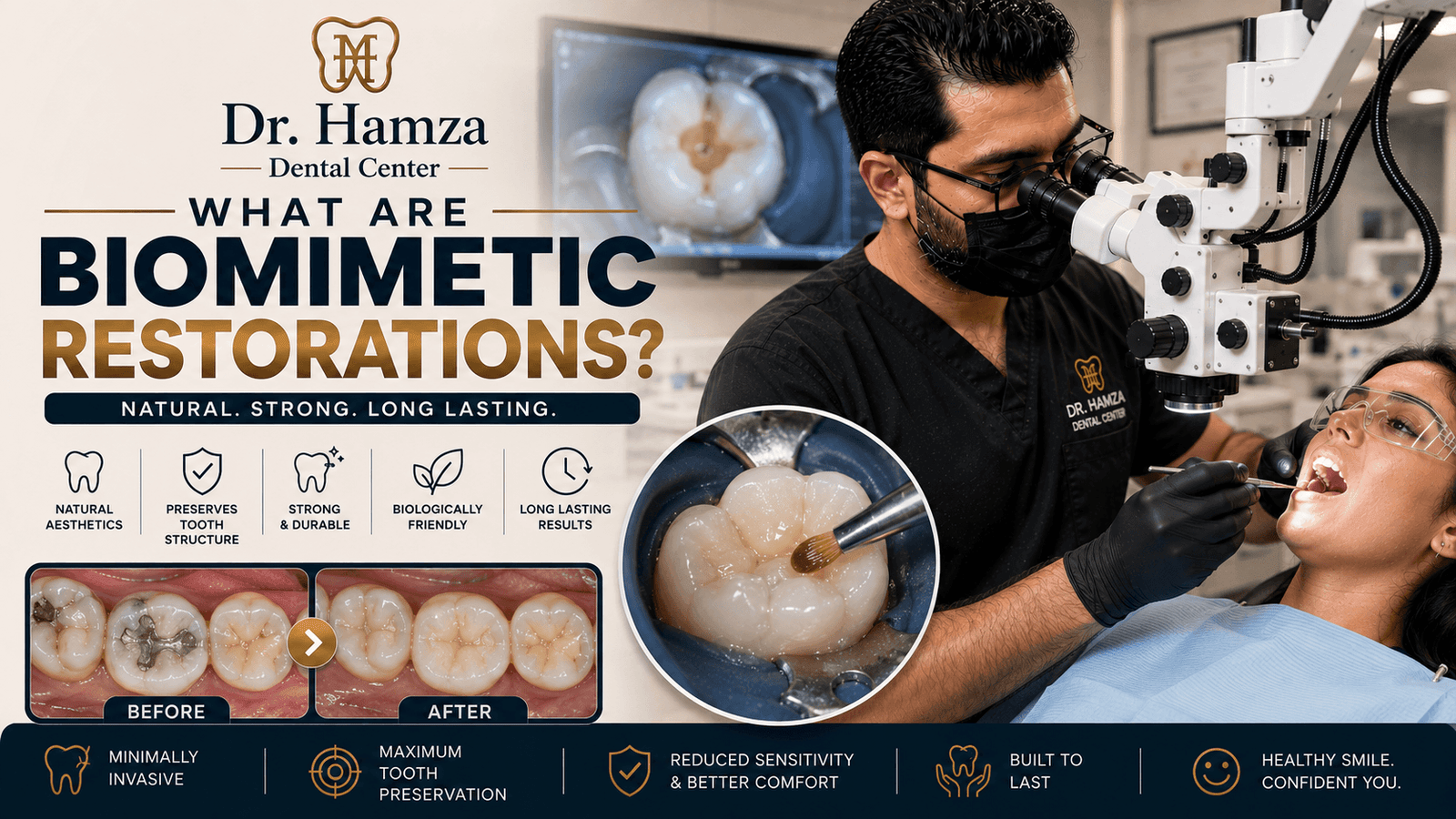
Biomimetic restorations are dental restorations designed to imitate the natural structure and function of a healthy tooth.
The word “biomimetic” essentially means copying or mimicking nature. In dentistry, this means looking at how a natural tooth absorbs chewing forces and then using appropriate materials and techniques to restore the tooth as closely as possible to that natural behavior.
Traditional restorative dentistry may sometimes involve removing additional tooth structure to create space for a restoration. Biomimetic dentistry takes a different approach where possible: preserve healthy tooth structure first.
Depending on the condition of the tooth, treatment may involve modern tooth-colored composite materials, adhesive techniques, ceramic restorations, or other carefully selected restorative options.
The exact treatment depends on the amount of healthy tooth structure remaining, the location of the tooth, the bite, previous dental work, and the patient’s individual needs.
Why Preserving Natural Tooth Structure Matters
Your natural tooth is not simply a solid piece of material. It has different layers and structures that work together to withstand everyday chewing forces.
When a significant amount of healthy tooth structure is removed, the remaining tooth may become more vulnerable to stress. This is particularly important when treating teeth that have already experienced large fillings, cracks, decay, or previous procedures.
Biomimetic dentistry places strong emphasis on conserving healthy enamel and dentin whenever clinically possible.
That does not mean every damaged tooth can be treated with a small filling. Some teeth may require a crown, onlay, overlay, root canal treatment, or another restoration.
The important point is that treatment should be based on the actual condition of the tooth rather than using the same solution for every patient.
How Biomimetic Restorations Work
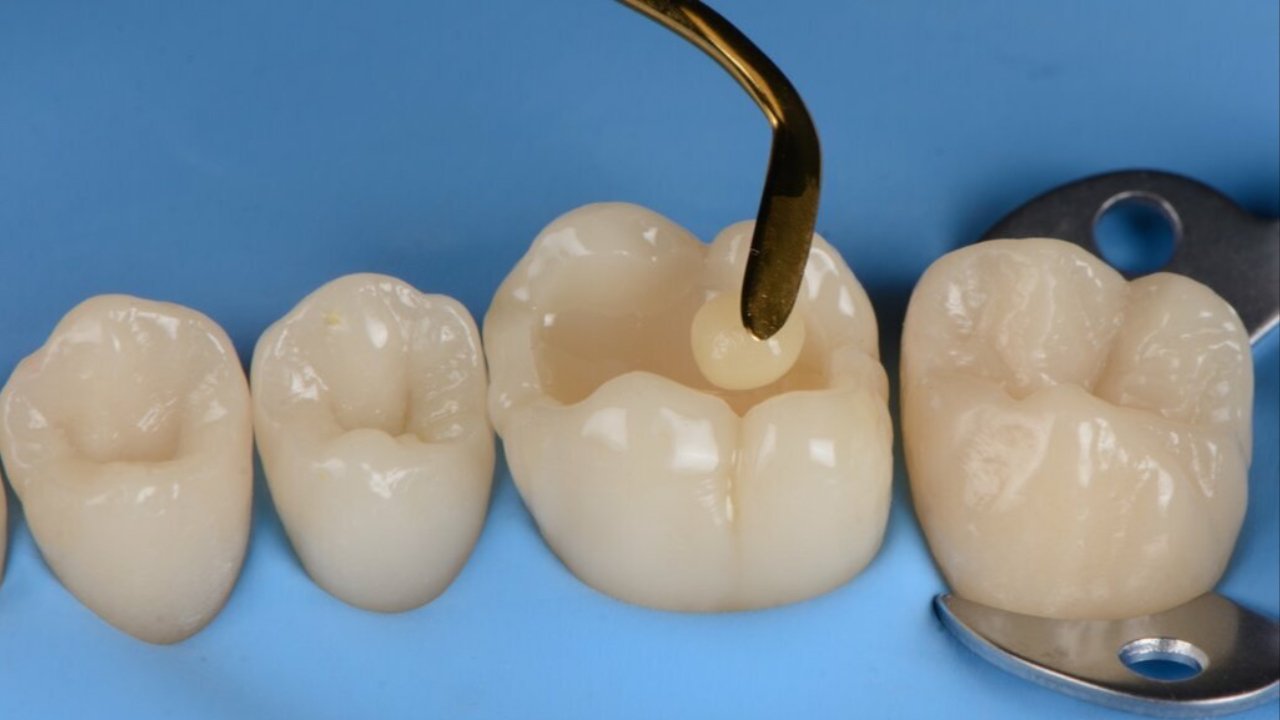
A biomimetic restoration begins with a careful assessment of the tooth.
Your dentist may evaluate:
- The amount of remaining healthy tooth structure
- Existing fillings or restorations
- Signs of cracks or fractures
- Tooth decay
- Bite and chewing forces
- Gum health around the tooth
- Symptoms such as sensitivity or pain
- Previous root canal treatment
- The appearance of the tooth
Once the condition of the tooth is understood, the dentist can determine which restorative option is appropriate.
The restoration is then designed to bond securely with the remaining tooth structure. Modern adhesive dentistry can help create a strong connection between the restorative material and the tooth.
The objective is not simply to “fill a hole.” It is to restore the shape, function, strength, and appearance of the tooth while respecting the natural structure that remains.
Biomimetic Restorations vs Traditional Dental Restorations
One of the biggest differences is the philosophy behind treatment.
Traditional restorative approaches can sometimes involve preparing a tooth more extensively to accommodate a restoration. Biomimetic dentistry generally emphasizes minimal intervention and preservation of healthy tooth structure.
For example, imagine a tooth with an old, large filling and weakened areas around it. Simply replacing the filling may not provide enough protection. On the other hand, removing large amounts of additional healthy tooth structure may not be ideal either.
A biomimetic approach may involve carefully removing damaged areas and restoring the tooth with an adhesive restoration designed around the remaining healthy structure.
However, biomimetic dentistry is not automatically better for every tooth. A severely fractured or structurally compromised tooth may require a more extensive restoration.
A qualified dentist should determine the most suitable option after examining the tooth.
Benefits of Biomimetic Restorations
1. Preservation of Healthy Tooth Structure
One of the main goals of biomimetic dentistry is to preserve natural tooth structure.
Keeping more healthy enamel and dentin can be valuable because your natural tooth is still the best starting point for rebuilding the tooth.
2. Natural Appearance
Modern tooth-colored restorative materials can be carefully matched to the surrounding teeth.
When properly planned and placed, restorations can blend into the smile rather than looking like obvious dental work.
This can be particularly important for visible front teeth, where appearance matters as much as function.
3. Strong Adhesive Bond
Modern adhesive dentistry allows certain restorative materials to bond directly to the tooth.
Instead of relying only on the physical shape of a restoration to keep it in place, adhesive techniques can help create a close connection between the tooth and restoration.
4. Restoration of Function
A damaged tooth can affect the way you bite and chew.
A properly designed restoration can help rebuild the tooth’s shape and restore comfortable function.
The dentist must also consider the patient’s bite because excessive forces can contribute to cracks, fractures, and restoration failure.
5. Conservative Treatment Philosophy
Biomimetic dentistry generally follows a conservative philosophy: do what is necessary, but avoid unnecessary removal of healthy tooth structure.
This can be particularly attractive to patients who want to maintain their natural teeth for as long as possible.
Who May Benefit From Biomimetic Restorations?
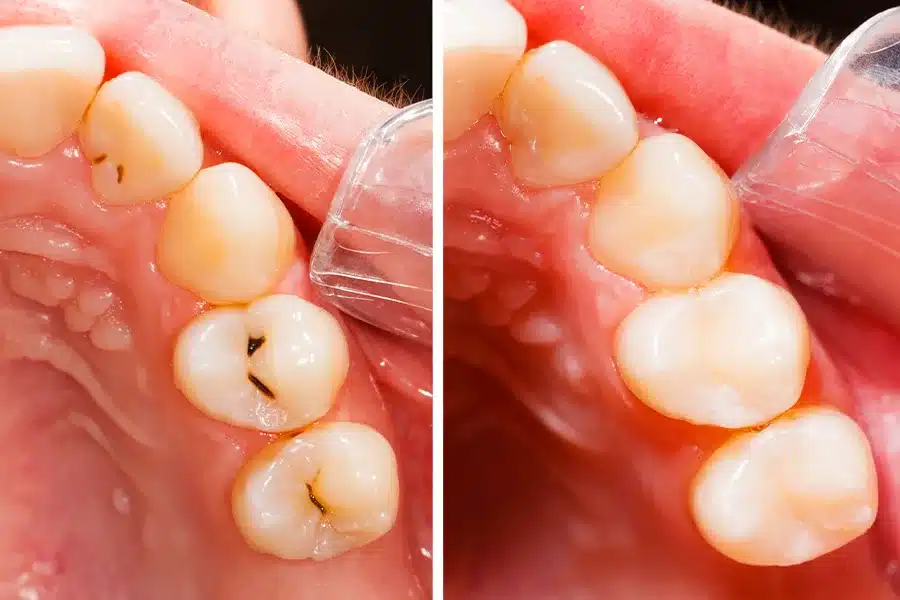
Biomimetic restorations may be suitable for patients with different types of dental problems, including:
- Large or failing fillings
- Worn teeth
- Cracked or weakened teeth
- Moderate tooth damage
- Tooth decay after removal of the affected area
- Broken cusps
- Teeth requiring replacement of old restorations
- Teeth that need functional and cosmetic improvement
However, not every tooth is a candidate.
If a tooth has extensive structural damage, deep infection, a significant fracture, or insufficient healthy structure, another treatment may be more appropriate.
This is why a proper dental examination is essential before deciding on treatment.
Are Biomimetic Restorations the Same as Fillings?
Not necessarily.
A conventional filling usually refers to restoring a cavity after decay has been removed. Biomimetic restoration is a broader treatment philosophy focused on restoring the tooth while attempting to preserve and imitate its natural structure and function.
A biomimetic restoration may use composite resin or other restorative materials depending on the situation.
For larger defects, an indirect restoration such as an inlay, onlay, or overlay may sometimes be considered.
The correct option depends on the individual tooth.
Biomimetic Dentistry for Cracked Teeth
Cracked teeth can be challenging because cracks may develop or progress under repeated chewing forces.
If the tooth has a crack, your dentist needs to determine its location, depth, and severity.
A minor structural problem may be managed with a conservative restoration and appropriate protection. More extensive cracks may require a different treatment.
Ignoring a cracked tooth can allow the problem to worsen, especially if you continue chewing heavily on it.
Symptoms such as pain when biting, sensitivity to cold, or discomfort when releasing your bite should not be ignored.
Early evaluation can help determine whether the tooth can be preserved and what treatment may be appropriate.
Biomimetic Restorations for Worn Teeth
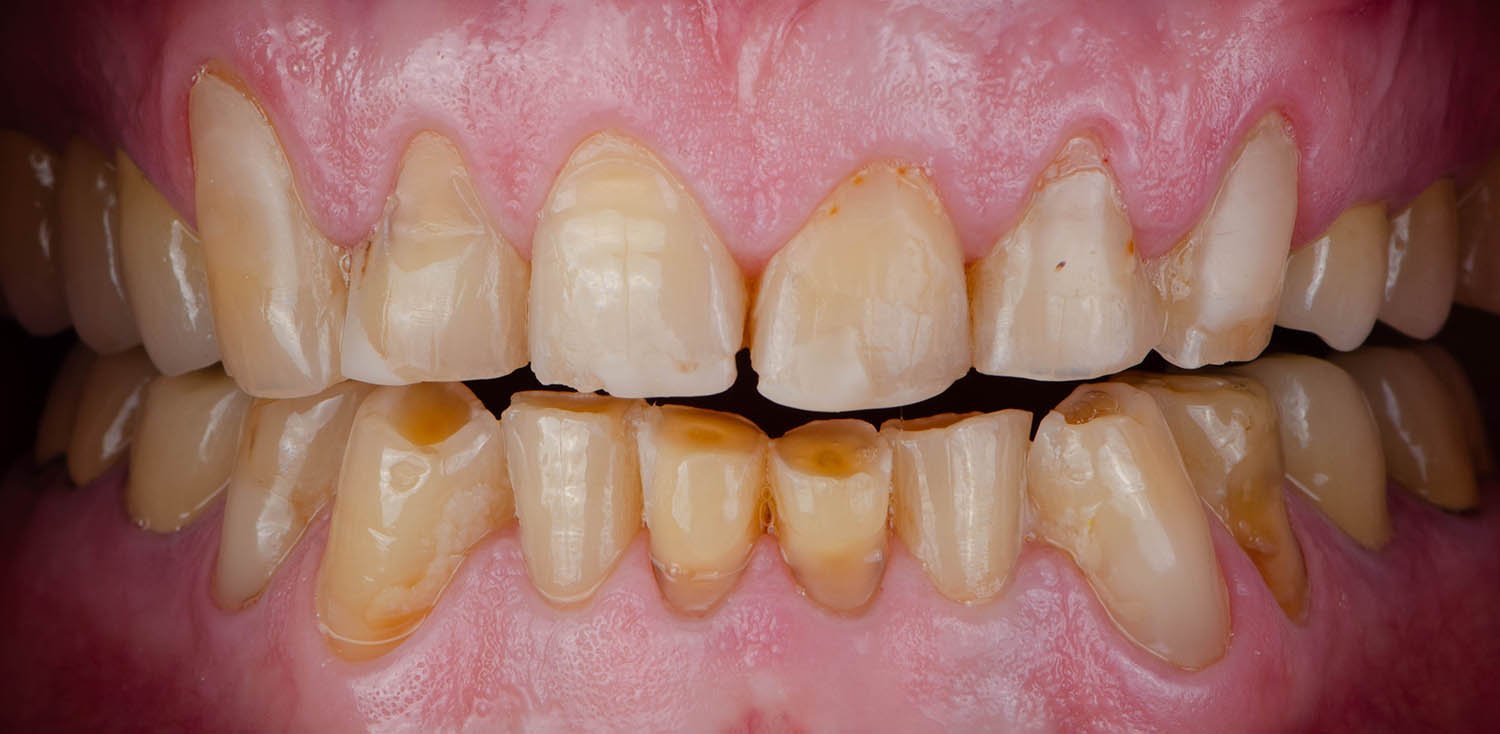
Teeth can become worn over time due to several factors, including normal aging, grinding or clenching, acidic exposure, and certain habits.
When tooth wear becomes significant, restoring the teeth is not only about improving appearance. The dentist also needs to consider the patient’s bite and the forces placed on the restorations.
A biomimetic approach may help restore damaged areas while maintaining as much healthy structure as possible.
If grinding is contributing to tooth wear, the dentist may also recommend strategies to protect the restorations and remaining natural teeth.
What Is the Procedure Like?
The exact process varies depending on the tooth and restoration required.
Generally, treatment may involve:
Step 1: Dental Examination
The dentist examines the tooth and evaluates its structure, symptoms, existing restorations, and surrounding tissues.
Dental X-rays or other diagnostic methods may be recommended when needed.
Step 2: Treatment Planning
The dentist determines how much healthy tooth structure remains and which restorative material is most appropriate.
The goal is to create a restoration that meets both functional and aesthetic requirements.
Step 3: Conservative Tooth Preparation
Only the damaged or unhealthy areas that need treatment are addressed, while healthy structure is preserved whenever clinically appropriate.
Step 4: Adhesive Restoration
The selected restorative material is placed using appropriate bonding and restorative techniques.
For larger restorations, an indirect restoration may be designed and fabricated before being bonded to the tooth.
Step 5: Bite Adjustment
The restoration is checked carefully against your bite.
This step is important because excessive biting pressure can place unnecessary stress on a restored tooth.
Step 6: Final Polishing and Evaluation
The restoration is shaped and polished to achieve a comfortable feel and natural appearance.
Your dentist will also provide advice on maintaining the tooth and restoration.
How Long Do Biomimetic Restorations Last?
There is no single lifespan that applies to every biomimetic restoration.
Longevity depends on several factors, including:
- The condition of the original tooth
- The size and location of the restoration
- The restorative material
- Bite forces
- Oral hygiene
- Diet and habits
- Tooth grinding or clenching
- Regular dental checkups
A well-maintained restoration can provide long-term service, but no dental restoration is guaranteed to last forever.
Good brushing, flossing, regular professional dental care, and addressing issues such as teeth grinding can help protect both the restoration and the natural tooth.
How to Care for a Biomimetic Restoration
Taking care of a restored tooth is similar to taking care of your natural teeth.
Brush twice a day using fluoride toothpaste and clean between your teeth regularly.
Avoid using your teeth to open packages or bite extremely hard objects. If you grind or clench your teeth, speak with your dentist because additional protection may be recommended.
Regular dental examinations are also important. Your dentist can monitor the restoration and identify changes before they become larger problems.
Is Biomimetic Dentistry Right for You?
The answer depends on your tooth.
If you have a large old filling, a cracked tooth, worn teeth, or a damaged tooth that you want to preserve, biomimetic dentistry may be worth discussing with your dentist.
The purpose is not to choose a treatment simply because it is called “biomimetic.” The purpose is to select a scientifically appropriate restoration that protects the tooth while preserving healthy structure whenever possible.
At Dr. Hamza Dental Centre, treatment should begin with a proper assessment of your dental condition, followed by a personalized treatment plan.
Why Choose Dr. Hamza Dental Centre?
Choosing a dental restoration is about more than selecting a material. It is about understanding the condition of the tooth and creating a treatment plan that fits your oral health, function, appearance, and long-term needs.
At Dr. Hamza Dental Centre, patients can discuss their concerns, understand their treatment options, and receive care based on the condition of their teeth.
Whether you are dealing with an old filling, tooth damage, cracks, worn teeth, or cosmetic concerns, a professional dental evaluation can help determine the most suitable treatment.
Frequently Asked Questions
Are biomimetic restorations better than crowns?
Not necessarily. Biomimetic restorations and crowns serve different situations. A crown may be appropriate when a tooth has extensive structural damage, while a more conservative restoration may be possible when enough healthy tooth structure remains.
Are biomimetic restorations painful?
The procedure is generally performed with local anesthesia when necessary, so patients should not feel significant pain during treatment. Some temporary sensitivity may occur afterward depending on the condition of the tooth.
Can biomimetic restorations replace old fillings?
In suitable cases, yes. A dentist can assess the old filling and the remaining tooth structure to determine whether it can be replaced with a more conservative bonded restoration.
Can biomimetic restorations be used on front teeth?
Yes. Depending on the condition of the tooth, tooth-colored adhesive materials can be used to restore both function and appearance.
How do I know if I need a biomimetic restoration?
The best way to find out is through a dental examination. Your dentist needs to evaluate the amount of healthy tooth structure remaining and determine whether a conservative restoration is appropriate.
Protect Your Natural Teeth With the Right Treatment
Your natural teeth are worth preserving.
If a tooth has been damaged, the goal should not always be to remove more structure than necessary. Modern adhesive dentistry and biomimetic principles can provide conservative options for restoring certain damaged teeth while maintaining as much healthy natural structure as possible.
If you are experiencing a cracked tooth, a failing filling, tooth wear, sensitivity, or damage, consider having the tooth evaluated before the problem becomes more complicated.
Dr. Hamza Dental Centre can assess your tooth and discuss the restorative options available for your specific situation.
Book a dental consultation at Dr. Hamza Dental Centre to find out whether a biomimetic restoration is suitable for your tooth.